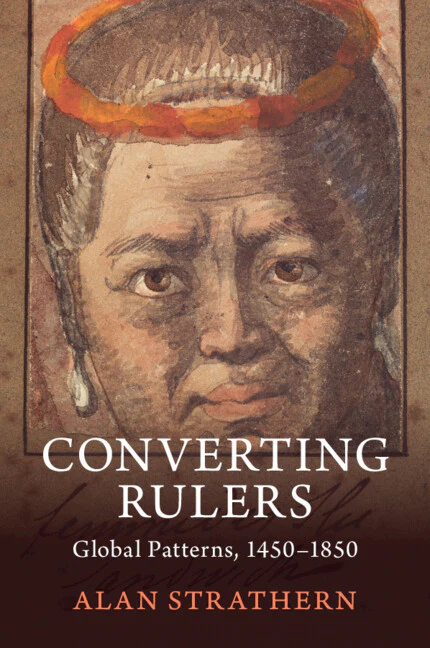
Converting Rulers
Why did so many rulers throughout history risk converting to a new religion brought by outsiders? In his award-winning Unearthly Powers (2019), Alan Strathern set out a theoretical framework for understanding the relation between religion and political authority based on a distinction between two kinds of religion - immanentism and transcendentalism - and the different ways they made monarchy sacred. This ambitious and innovative companion volume tests and substantiates this approach using case studies from Kongo (1480–1530), Japan (1560–1614), Ayutthaya (Thailand, 1660–1690) and Hawaii (1800–1830). Through in-depth analysis of key turning points in the careers of warlords, chiefs and kings, a tapestry of unique characters and stories is brought to light. However, these examples ultimately demonstrate that global patterns of conversion can be established to illuminate the religious geography of the world today.
- Substantiates and develops the author's theory on the development of the religious map of the world
- Provides an in-depth analysis of key turning points in the history of Kongo, Japan, Thailand, and Hawaii
- Transcends specialisms by examining diverse regions and identifying global patterns
Original: $51.62
-65%$51.62
$18.07Product Information
Product Information
Shipping & Returns
Shipping & Returns
Description
Why did so many rulers throughout history risk converting to a new religion brought by outsiders? In his award-winning Unearthly Powers (2019), Alan Strathern set out a theoretical framework for understanding the relation between religion and political authority based on a distinction between two kinds of religion - immanentism and transcendentalism - and the different ways they made monarchy sacred. This ambitious and innovative companion volume tests and substantiates this approach using case studies from Kongo (1480–1530), Japan (1560–1614), Ayutthaya (Thailand, 1660–1690) and Hawaii (1800–1830). Through in-depth analysis of key turning points in the careers of warlords, chiefs and kings, a tapestry of unique characters and stories is brought to light. However, these examples ultimately demonstrate that global patterns of conversion can be established to illuminate the religious geography of the world today.
- Substantiates and develops the author's theory on the development of the religious map of the world
- Provides an in-depth analysis of key turning points in the history of Kongo, Japan, Thailand, and Hawaii
- Transcends specialisms by examining diverse regions and identifying global patterns