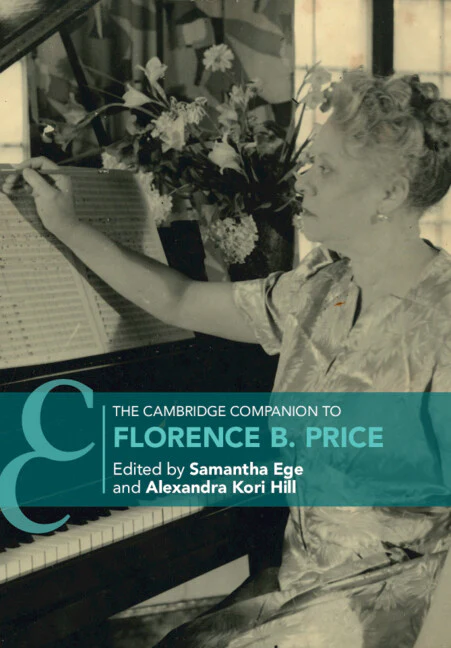
The Cambridge Companion to Florence B. Price
Active in Chicago during the first half of the twentieth century, Florence B. Price was an African American composer, pianist, organist and music teacher, and a central figure in the first generation of Black composers of art music in the US. Price's aesthetic engaged with Black music of the enslavement period, and her gendered racial identity deserves careful consideration, while her geography and era distinguish her trajectory from those of her European and Anglo-American counterparts. This Companion introduces readers to archives and sources on Price, the style and genre of her music, and her artistic communities, and reception. It contextualizes Price's music and life in relation to the sociocultural climate of her time, the Black classical scene to which she belonged, and the compositional aesthetics that informed her craft. It offers an alternative view of music's capacity to uplift and amplify underrepresented voices.
- The first Cambridge Companion to focus on a Black female composer
- Provides analysis of works that have not been analyzed before across a breadth of genres and styles
- Introduces readers to the deeper history of Black women's activity in the US
Product Information
Product Information
Shipping & Returns
Shipping & Returns
Description
Active in Chicago during the first half of the twentieth century, Florence B. Price was an African American composer, pianist, organist and music teacher, and a central figure in the first generation of Black composers of art music in the US. Price's aesthetic engaged with Black music of the enslavement period, and her gendered racial identity deserves careful consideration, while her geography and era distinguish her trajectory from those of her European and Anglo-American counterparts. This Companion introduces readers to archives and sources on Price, the style and genre of her music, and her artistic communities, and reception. It contextualizes Price's music and life in relation to the sociocultural climate of her time, the Black classical scene to which she belonged, and the compositional aesthetics that informed her craft. It offers an alternative view of music's capacity to uplift and amplify underrepresented voices.
- The first Cambridge Companion to focus on a Black female composer
- Provides analysis of works that have not been analyzed before across a breadth of genres and styles
- Introduces readers to the deeper history of Black women's activity in the US